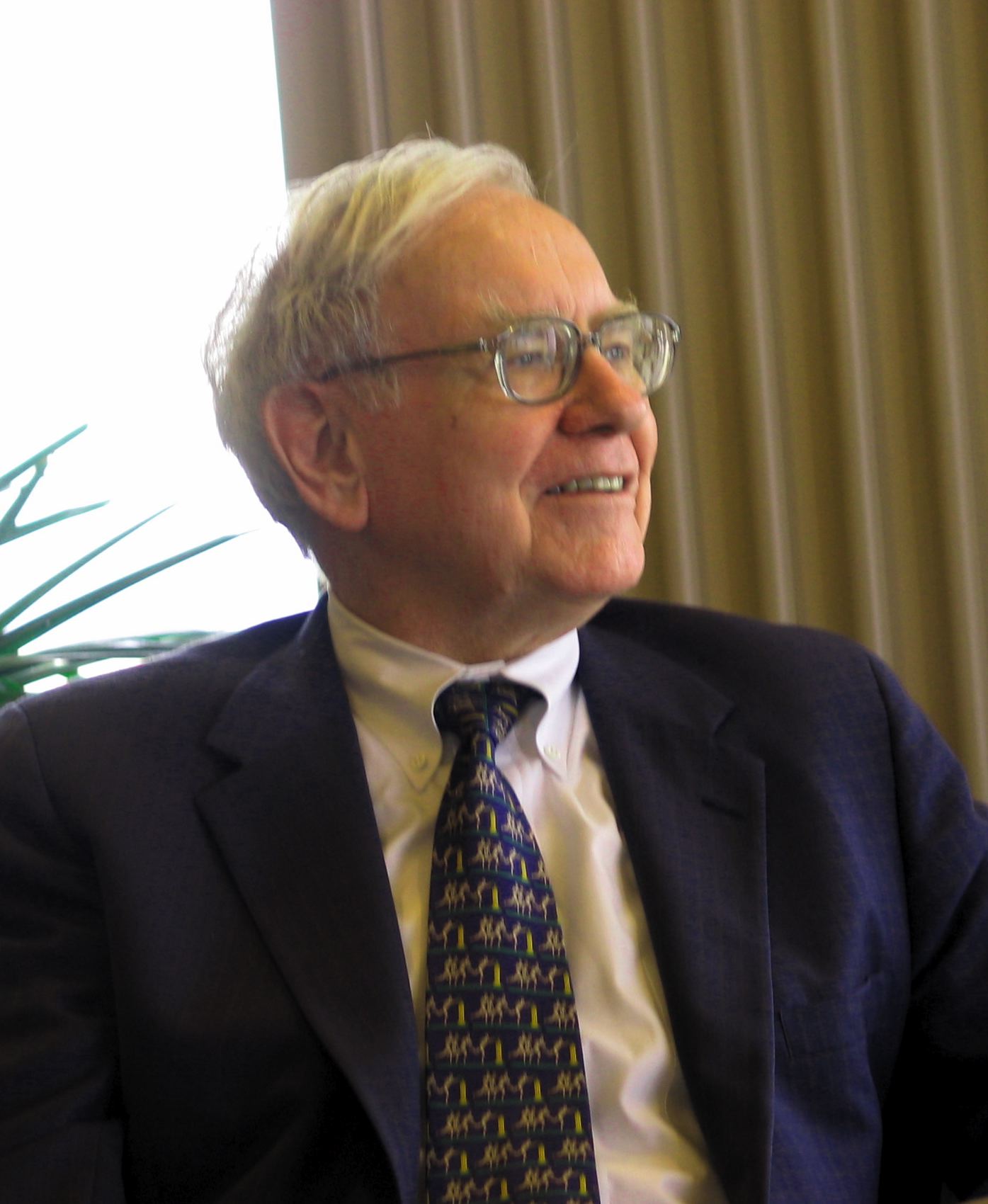
LeaderPortfolio
Buffett
Warren Buffett
Rank #10
UNITED STATESfinance-investmentsBerkshire Hathaway

Warren Buffett

Net Worth
$143.468B
-0.39% (24h)
Warren Edward Buffett, born August 30, 1930, is a legendary American investor and philanthropist, celebrated as the "Oracle of Omaha." His estimated net worth of $148.9 billion (as of January 2026) places him among the world's wealthiest individuals. His wealth stems primarily from his ownership of Berkshire Hathaway, a multinational conglomerate. Buffett's career, spanning over seven decades, transformed a struggling textile company into a $1.1 trillion conglomerate. Known for his value investing approach, he focuses on acquiring companies with durable competitive advantages. He is also celebrated for his philanthropy, having pledged to donate almost all of his wealth to charitable causes. Buffett's legacy includes not only financial success but also a lasting impact on corporate governance and the investment world.

How to read Warren Buffett's profile

Public net-worth figures are estimates. They combine observable inputs—typically listed equity, disclosed transactions, and market prices—with editorial judgment where filings are incomplete (for example, private holdings, debt, or cross-holdings). For Warren Buffett, we anchor the narrative to Berkshire Hathaway Inc. and Berkshire Hathaway, then update the headline number as markets move. The chart on this page is meant to show trajectory, not a certified balance sheet.

When you see $143.468B alongside global rank #10, interpret it as our best synthesis of widely cited ownership and price signals—not a claim about cash on hand. Estimates can diverge from other publishers because of different treatment of options, trusts, charitable vehicles, or illiquid assets. We document the general approach in methodology and welcome corrections via corrections.

Country (UNITED STATES) and career milestones on this page are curated for reader context; they should be verified against primary sources when used for research. Editorial metadata for this profile is refreshed on a rolling basis, with deeper audits at least annually (last noted cycle: 2026).

Looking for depth? When available, the dossier and timeline sections below add long-form context beyond the headline number—prioritize those modules when evaluating claims about strategy, controversies, or philanthropic commitments.

The Full Dossier

Early Life

Warren Buffett was born in Omaha, Nebraska, on August 30, 1930. He was the only son and second of three children. Buffett displayed an aptitude for business and finance from a young age, demonstrating exceptional mathematical abilities. By age 11, he had already begun investing in stocks. He attended the Wharton School of the University of Pennsylvania for two years before transferring to the University of Nebraska-Lincoln, where he earned a degree in Business Administration. He then pursued a Master's degree in Economics from Columbia University, where he studied under Benjamin Graham, the father of value investing.

Rise to Success

Buffett's career began with an investment partnership in 1956. He later took control of Berkshire Hathaway in 1965, transforming it from a textile manufacturer into a diversified investment conglomerate. His investment strategy, heavily influenced by Benjamin Graham, focused on identifying undervalued companies with strong fundamentals. Buffett's success grew through strategic investments in various sectors, including insurance, energy, and consumer goods. He is known for his long-term investment approach, holding stocks for extended periods and focusing on the intrinsic value of companies.

Key Business Strategies

Buffett's key business strategies involve value investing, identifying companies with a durable competitive advantage, and maintaining a concentrated portfolio. He emphasizes buying "wonderful companies at fair prices" rather than just cheap stocks. His strategy includes a deep understanding of a company's business model, management, and financial health. Buffett is also known for his preference for simple business models and his willingness to hold investments for the long term. Berkshire Hathaway's success is a testament to these strategies.

Philanthropy

Warren Buffett is also a prominent philanthropist, having pledged to give away almost all of his wealth. He and Bill Gates initiated The Giving Pledge in 2010, encouraging billionaires to donate at least half their fortunes to charitable causes. Buffett has donated billions to the Bill & Melinda Gates Foundation and his family's foundations. He has contributed over $41 billion to philanthropic causes so far.

Career Timeline

2025

Announced retirement as CEO

Will step down at the end of 2025

2010

Co-founded The Giving Pledge

Launched the initiative with Bill Gates

1965

Took control of Berkshire Hathaway

Began transforming the company into a conglomerate

1956

Founded Buffett Partnership Ltd.

Started his own investment firm

1954

Became a securities analyst

Worked at Graham-Newman Corp.

1951

Began career as an investment salesman

Worked at Buffett-Falk & Co.

Philanthropic Impact

Philanthropy$XB

The Giving Pledge

Commitment to donate the majority of his wealth to charitable causes.

Key Business Ventures & Holdings

CompanyStakeValue
Apple Inc22.60%$59.8M
American Express Co20.46%$55.4M
Bank of America Corp10.38%$28M
Coca-Cola Co10.20%$27.5M
Chevron Corp7.24%$19.6M

Net Worth History

In-Depth Analysis

Early Life

Warren Buffett was born in Omaha, Nebraska, on August 30, 1930. He was the only son and second of three children. Buffett displayed an aptitude for business and finance from a young age, demonstrating exceptional mathematical abilities. By age 11, he had already begun investing in stocks. He attended the Wharton School of the University of Pennsylvania for two years before transferring to the University of Nebraska-Lincoln, where he earned a degree in Business Administration. He then pursued a Master's degree in Economics from Columbia University, where he studied under Benjamin Graham, the father of value investing.

Rise to Success

Buffett's career began with an investment partnership in 1956. He later took control of Berkshire Hathaway in 1965, transforming it from a textile manufacturer into a diversified investment conglomerate. His investment strategy, heavily influenced by Benjamin Graham, focused on identifying undervalued companies with strong fundamentals. Buffett's success grew through strategic investments in various sectors, including insurance, energy, and consumer goods. He is known for his long-term investment approach, holding stocks for extended periods and focusing on the intrinsic value of companies.

Key Business Strategies

Buffett's key business strategies involve value investing, identifying companies with a durable competitive advantage, and maintaining a concentrated portfolio. He emphasizes buying "wonderful companies at fair prices" rather than just cheap stocks. His strategy includes a deep understanding of a company's business model, management, and financial health. Buffett is also known for his preference for simple business models and his willingness to hold investments for the long term. Berkshire Hathaway's success is a testament to these strategies.

Philanthropy

Warren Buffett is also a prominent philanthropist, having pledged to give away almost all of his wealth. He and Bill Gates initiated The Giving Pledge in 2010, encouraging billionaires to donate at least half their fortunes to charitable causes. Buffett has donated billions to the Bill & Melinda Gates Foundation and his family's foundations. He has contributed over $41 billion to philanthropic causes so far.

Data Sources & Methodology

Figures for Warren Buffett are synthesized from the sources below and cross-checked against our net worth methodology. Estimates may lag market moves; see corrections to report discrepancies.

Latest News

Buffett's Billion-Dollar Secret: The Son, the Surprise, and the Shadow of Omaha's Oracle

May 30, 2026

Buffett's Billion-Dollar Secret: The Son, the Surprise, and the Shadow of Omaha's Oracle

Warren Buffett, the Sage of Omaha, kept a secret even from his own son: his unfathomable wealth. This revelation, surfacing in Peter Buffett's adulthood, peels back the layers of a carefully constructed financial and personal narrative. The implications ripple far beyond the Buffett family, challenging our assumptions about wealth, legacy, and the true cost of 'living well'.

Abel's Gambit: Berkshire's Shocking Q1 Moves and the Unfolding Post-Buffett Era

May 26, 2026

Abel's Gambit: Berkshire's Shocking Q1 Moves and the Unfolding Post-Buffett Era

Greg Abel, the new sheriff in town at Berkshire Hathaway, has just thrown down the gauntlet. Q1 saw moves that defy Buffett's decades-long playbook, signaling a dramatic shift in strategy. This isn't just about managing assets; it's a re-imagining of Berkshire, with long-term implications for the entire market and a clear bet on a future Buffett himself may not have envisioned.

Abel's Gambit: Berkshire's Shocking Q1 Moves and the Unfolding Post-Buffett Era

May 26, 2026

Abel's Gambit: Berkshire's Shocking Q1 Moves and the Unfolding Post-Buffett Era

Greg Abel, the new sheriff in town at Berkshire Hathaway, has just fired the opening shots in a high-stakes power play. Q1 reveals a Berkshire unlike anything we've seen – aggressive, decisive, and unafraid to dismantle the old guard's playbook. This isn't just about portfolio adjustments; it's a fundamental recalibration of Berkshire's strategy, with massive implications for the market and the future of value investing.

Abel's Gambit: Why Buffett's Heir Just Bet $234 Million on His Mentor's Favorite Stock, and What It Reveals About Berkshire's Future

May 22, 2026

Abel's Gambit: Why Buffett's Heir Just Bet $234 Million on His Mentor's Favorite Stock, and What It Reveals About Berkshire's Future

Greg Abel, the man poised to inherit the Oracle of Omaha's throne, just made a massive bet, sinking a quarter-billion dollars into a single, familiar stock. This isn't just a transaction; it's a carefully orchestrated power move, a declaration of principles, and a high-stakes gamble on the future of Berkshire Hathaway. Expect ripples throughout the market as competitors scramble to decipher the implications of Abel's play and the legacy he's chosen to embrace.

Abel's Gambit: Has Buffett's Heir Apparent Fallen Prey to the Oracle's Biggest Blunders?

May 22, 2026

Abel's Gambit: Has Buffett's Heir Apparent Fallen Prey to the Oracle's Biggest Blunders?

Greg Abel, the newly anointed CEO of Berkshire Hathaway, faces a crucible. This analysis reveals a series of strategic decisions that mirror Warren Buffett's past missteps, potentially jeopardizing the conglomerate's future. We dissect the deals, the psychology, and the market forces at play, predicting a turbulent decade ahead.

Abel's Gambit: Is Berkshire's New CEO Repeating Buffett's Billion-Dollar Blunders?

May 22, 2026

Abel's Gambit: Is Berkshire's New CEO Repeating Buffett's Billion-Dollar Blunders?

Greg Abel, the hand-picked successor to Warren Buffett, is charting a course that mirrors some of the Oracle of Omaha's most controversial decisions. This article dissects Abel's recent moves, analyzing whether he's inheriting brilliance or the seeds of potential downfall. We pull no punches in assessing the strategic risks and market implications of Abel's initial tenure.