Bezos's Blue Origin Blunder: A Rocket's Demise and the Billionaire's Calculated Risk
"The explosion of a Blue Origin rocket during a test flight isn't just a technical setback; it's a strategic gut punch for Jeff Bezos. This failure, however, reveals a deeper game: a calculated dance between innovation, ambition, and the relentless pursuit of space dominance. The question now isn't *if* Blue Origin will recover, but *how* Bezos will leverage this crucible moment to reshape the space race."
Key Takeaways
- •The Blue Origin rocket explosion is a major setback, but not a fatal blow, for Jeff Bezos's space ambitions.
- •This failure is a critical test of Bezos's resilience and strategic long-term vision in the space industry.
- •The incident underscores the inherent risks and challenges of space exploration and its impact on the industry's landscape and investment sentiment.
The Lede: Smoke and Mirrors in the Stratosphere
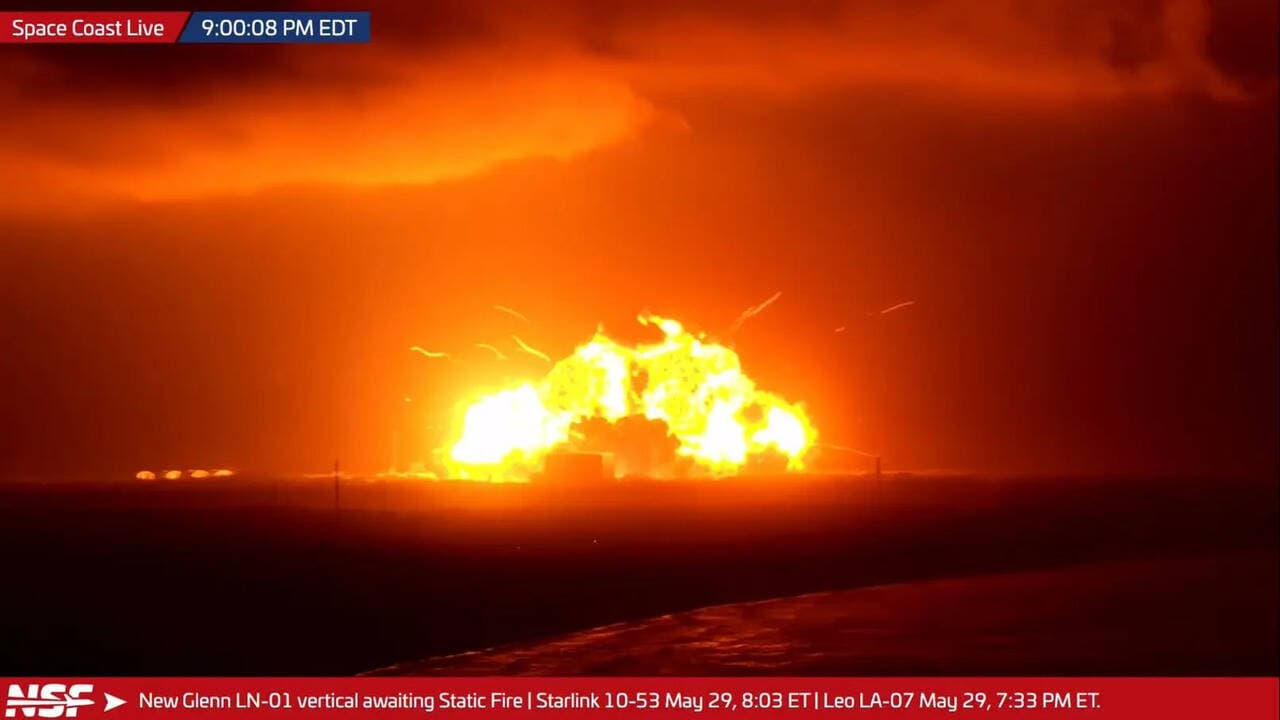
The desert air hung thick with the metallic tang of burnt propellant. A plume of angry orange and black billowed skyward, momentarily obscuring the unforgiving blue. This was the tableau on a day that would forever be etched in the annals of space exploration: The day Jeff Bezos's carefully constructed narrative, the one promising a future among the stars, met the brutal, unforgiving reality of physics. A Blue Origin rocket, the brainchild of the man who once dominated online retail, had met its fiery end during a test. The initial reports were clinical, the language of engineers and press releases. 'Anomaly detected,' they said. 'Mission aborted.' But the truth, as always, was more visceral, more revealing. It was a moment that could define, or perhaps redefine, Bezos's legacy.
The footage, quickly disseminated across the globe, was a stark reminder of the inherent risks that accompany pushing the boundaries of human endeavor. The sleek, white rocket, a symbol of Bezos's boundless ambition, had disintegrated in a matter of seconds. The failure was a costly blow, not just in terms of dollars and lost hardware, but in the erosion of public trust and the potentially devastating impact on investor confidence. The immediate post-mortem would, undoubtedly, focus on technical failures: engine malfunctions, structural weaknesses, or software glitches. But beyond the immediate technical details, lay a story far richer, more complex, and more revealing of the high-stakes game being played out in the space race.
The airwaves were filled with pundits and analysts opining on the fallout. The stock prices of space-related companies, including the behemoths like SpaceX and the emergent players, became the focus of intense scrutiny. The immediate question was whether this was a fatal blow. But the seasoned observer knew better. This was a moment not of defeat, but of recalibration. And in the high-stakes world of space, recalibration often precedes the next, more audacious play.
The Context: From Amazon to the Ascendant
To understand the implications of this event, one must first rewind the tape. Jeff Bezos, the visionary behind Amazon, the e-commerce empire that redefined the retail landscape, wasn't content with terrestrial dominance. His gaze was fixed on the heavens. His foray into space exploration, Blue Origin, was not merely a vanity project; it was a carefully constructed element of a grander strategy. The seeds of this strategy were sown years ago, in the early days of Amazon, with a relentless focus on logistics, innovation, and an unwavering commitment to long-term investment. He understands the value of patience and the potential of disruptive technologies.
Bezos, always a voracious reader of history, was well aware of the legacies of men like Howard Hughes, the aviation pioneer, and the early titans of space exploration. He understood that fortunes are made and lost on the cutting edge. His strategy: to build a vertically integrated space company, one that would control every aspect of the space travel experience, from the rockets themselves to the payloads they carry. Blue Origin was not intended merely to catch up with SpaceX or other established players; it was designed to fundamentally *reimagine* space exploration.
Blue Origin's initial focus was suborbital space tourism, a market that, while nascent, held the promise of high-margin returns. The New Shepard rocket, designed for short hops into the edge of space, was the initial focus. This, however, was just the tip of the iceberg. The real prize, the ultimate aim, was orbital flight. That's where the *New Glenn* rocket came in, a behemoth designed to compete directly with SpaceX's Falcon 9, targeting contracts from NASA, the military, and commercial entities. The ultimate goal, as Bezos has repeatedly stated, is to make space accessible to everyone, to create a future where millions of people live and work beyond Earth.
But the road to space is paved with failures. The early struggles of SpaceX, the countless setbacks and explosions, were well documented. Bezos was, no doubt, studying these failures, learning from them, and preparing his own company for the inevitable bumps along the way. The explosion of the Blue Origin rocket was not a failure of Bezos's vision; it was a test of his resilience, his financial resources, and his unwavering belief in the long game.
The Core Analysis: Dollars, Dreams, and Deception
The financial implications of this test flight failure are substantial, but far from fatal. The cost of the rocket, the research and development, the lost time, all represent a significant hit to Blue Origin’s balance sheet. However, Bezos is not short on cash. The founder of Amazon is also one of the richest people on Earth. He has the resources to absorb these losses, to learn from the mistakes, and to continue investing in Blue Origin. The market's reaction, the immediate dip in Blue Origin’s prospects, would be temporary, as the underlying strategic drivers remain intact.
The hidden agenda, however, is more nuanced. Bezos isn't just building rockets; he's building a brand. Blue Origin, like SpaceX, is about more than just technology; it is about narrative. It's about shaping the public perception of space exploration. The images of successful launches, the heroic stories of the pioneers, the promises of a future among the stars, all serve a critical purpose: to attract investors, to galvanize public support, and to inspire the next generation of space explorers.
The failure of the test flight presents both a challenge and an opportunity. It is a challenge in that it undermines the carefully constructed narrative of flawless engineering. It is an opportunity in that it allows Bezos to demonstrate his resilience, his commitment, and his ability to learn from mistakes. A truly devastating crash, however, would have been different. The fact that the crew capsule successfully separated from the rocket, thanks to a launch abort system, might assuage concerns. Now, Bezos can reframe the narrative. He can highlight the safety systems, the quick response, and the lessons learned. He can turn a setback into a story of perseverance, engineering prowess, and the relentless pursuit of innovation.
Furthermore, this failure allows a reevaluation of the competition. SpaceX, the current industry leader, would be the primary beneficiary in the short term. The incident would create a moment of market consolidation. NASA contracts would be reevaluated, potentially favoring SpaceX. The price for existing players goes up. But Bezos and Blue Origin can take advantage of the market reshuffle. The failure may allow Blue Origin to learn new engineering skills, and to build stronger systems.
The 'Macro' View: Reshaping the Space Race Landscape
This incident is a significant event in the ongoing space race. The consequences extend far beyond the immediate damage to Blue Origin. The incident influences a broader shift across the industry. The impact on the investment landscape is a point of prime concern. Venture capitalists, always on the lookout for the next big thing, might have to reconsider their investments in space-related companies. However, this is unlikely. Rather, this is more likely to result in a flight-to-safety moment. The investors will seek to invest in companies with a proven track record. This would give the leaders an advantage in consolidating their positions.
The incident also raises questions about the pace of innovation. The pressure to compete, to be first, can sometimes lead to shortcuts. Safety protocols may be compromised, engineering standards may be relaxed. The explosion would serve as a reminder to the entire industry that the laws of physics are inviolable. It would prompt a renewed focus on rigorous testing, meticulous engineering, and a more cautious approach to innovation.
Moreover, the incident adds to the existing geopolitical complexities of the space race. Space exploration is no longer merely a matter of scientific discovery or commercial opportunity; it has become a strategic imperative. The race to the moon, the development of new military technologies, and the potential for resource extraction in space all have profound implications for national security and international relations. The incident provides countries with an opening to step up their game, and also to take stock of their competitors. China, Russia, and India are becoming major players in the space economy. The U.S. will need to reassess its strategy. It will need to bolster its alliances. It will need to ensure its continued dominance in the industry.
The Verdict: The Future is Still Written in the Stars
The explosion of the Blue Origin rocket was a setback, but it wasn't a death knell. Jeff Bezos has faced far greater challenges in his career. His vision is still compelling. His resources are still vast. His commitment to the long game is unwavering. The market has always been resilient to shocks, and this moment will be no different. The question now isn't if, but *when* Blue Origin will launch again, and *how* they will come back stronger. The answer is obvious. Expect a comprehensive investigation, a meticulous review of the design flaws, and an even more aggressive push to dominate the orbital market. The stakes are simply too high for Bezos to fail.
Within the next year, expect Blue Origin to have addressed the issues that caused the failure. They will have improved their testing procedures, and their engineering capabilities. They will have secured new contracts with NASA and the military. They will be back to orbit, carrying payloads, and continuing to develop the technology that will enable them to reach the moon and beyond. However, don't expect the market share to come easily. The leaders will make a move to consolidate and establish their dominance. The competition will be tough.
Over the next five years, the space industry will undergo a dramatic transformation. We will see the emergence of new technologies, new business models, and new players. Blue Origin, if successful, will be at the forefront of this transformation. They will launch human missions into orbit. They will build the infrastructure for space tourism. They will begin to establish a permanent presence on the moon and beyond. The future is out there.
Ten years from now, the space race will have entered a new phase. We will be living in a world where space travel is commonplace. The barriers to entry will be lower. The technology will be more advanced. Blue Origin would be among the biggest companies in the world. Its value would be in the trillions of dollars. This is what Bezos sees. And this is what the future holds.
In the aftermath of the explosion, the world will have a moment of doubt. There would be questions regarding the direction of the company. In the end, it will give rise to an even more tenacious, innovative, and driven company. Jeff Bezos would not have it any other way. This is not the end of the story; it's merely the end of the beginning. The race to the stars continues, and Jeff Bezos, with all his resources, is still very much in it.
Sources & further reading
Related analysis
- Amazon's Ascent: Navigating the Tides of Triumph – A Veteran's Guide to Playing the Stock
- Silicon Valley's Red Flag: Laura Loomer's Nvidia Assault – Is Jensen Huang's China Connection the Next Tech Scandal?
- Microsoft's Masterstroke: Why Wall Street Is Blind to the True Value of MSFT (And Why That's Their Advantage)
- Data Center Gold Rush: Why Infrastructure Construction Stocks Are the Only Game in Town
- Nomura's Walmart Exit: A Canary in the Coal Mine for Retail's Future?
- Jabil's AI Infrastructure Gamble: A High-Stakes Bet on the Future or a Mirage of Growth?